
China reforms its secret RSDL jails, but will anything change?
This is the first of a three-part series on on Residential Surveillance at a Designated Location (RSDL), the Chinese Communist Party’s (CCP) system of enforced disappearances. The second part, Systematic terror, provides the latest data on the rising numbers of RSDL prisoners, while the third part, RSDL in applied coercive measures, analyses how RSDL is applied, and in which part of people’s judicial process, and shows just how flexible, and thus powerful, the RSDL system is.
For a great backgrounder on RSDL, read our graphic-heavy report Locked Up.
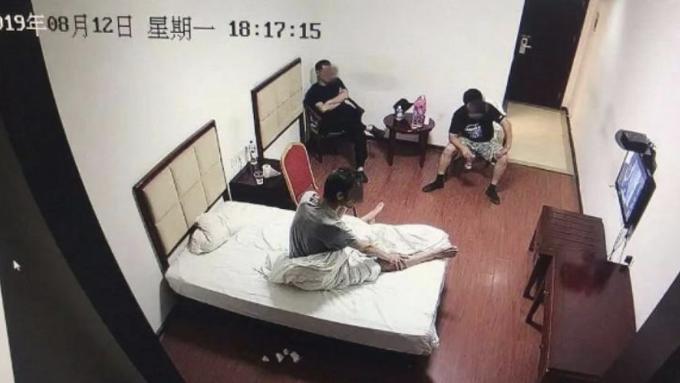
In the summer of 2025, posts began to appear on local prosecutor websites in China talking about new rules for carrying out RSDL, a secretive system of incommunicado detention. RSDL, which is imposed pre-arrest for up to six months, has been linked with police abuse and increased risk of torture and forced confessions. UN human rights bodies have called out the system for being “tantamount to enforced disappearance”.
In recent years, RSDL had been making headlines with a string of people dying in RSDL. In 2025, there was even a prominent court case where 11 police officers were sentenced in connection with the death of man after being brutally tortured in RSDL.
For some time, there had been loud calls among the legal community and even some quarters of government for it to be reformed or scrapped altogether. By 2025, media, including state-owned outlets, were reporting on the deaths cases and the need to do something about the abuses in RSDL. All the while this was happening, work had already begun on reforming, for the forth time, China's Criminal Procedure Law, they key substantive law on all things related to the criminal justice system, often called a "mini-constitution".
These new rules were the CCP’s answer to those calls.
“Provisions on Lawfully Regulating the Application and Oversight of Residential Surveillance in a Designated Location” (《关于依法规范指定居所监视居住适用和监督的规定》) were jointly issued by the Ministry of Public Security (MPS) and Supreme People’s Procuratorate (SPP) on 30 June 2025.
But like RSDL itself, there has been a lot of secrecy surrounding these provisions.
As of publishing this story, nine months after they were issued, the text has still not been formally published on either the MPS or SPP websites, although you can find the text on the websites of Chinese law firms and western academics. Despite this, from the posts on local prosecutor branches, it is clear the provisions have been circulated and both MPS and SPP officers are being trained on how to implement them.
One reason for the secrecy could be related to the sensitiveness of this issue. These provisions are a clear rebuff to those who called for the repeal of RSDL, both domestically and internationally. While the provisions do attempt to address some of the concerns about RSDL, such as the risk of detainee torture and death, their issuance is a signal that rather than being scrapped, the system is even more firmly entrenched in the legal system than before.
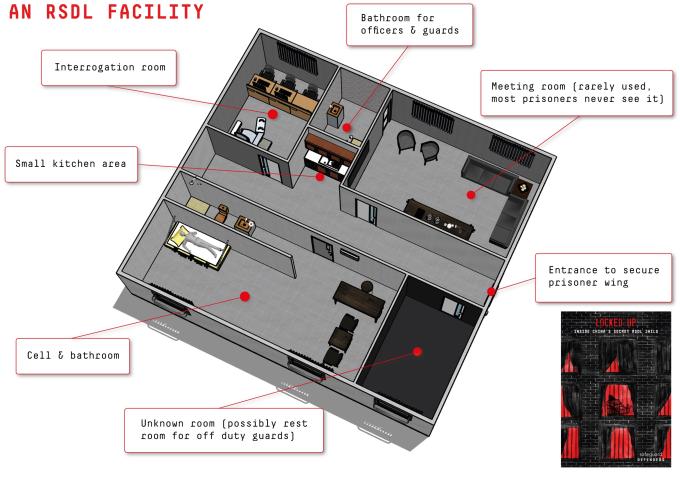
RSDL was originally conceived as a lighter alternative to arrest for suspects, such as pregnant mothers or ill individuals, who might be affected by being held in a detention centre. Instead, it has become the police’s go-to tool to break difficult cases. In a study of court judgements involving RSDL from 2018 to 2019, RSDL was imposed for the needs of the suspect in only 19% of the cases [1]. The remainder were related to the needs of the case (47%) or unclarified. A major study covering 2013 to 2017 found similar results [2].
The string of deaths in RSDL stems from how police have abused the system. Critics point to how it has become a favoured approach as it gives them unparalleled power to secure confessions by isolating the suspect away from the world, including their own lawyer.
RSDL gives police unfettered access to the suspect for extended interrogations, which can go on for hours, sometimes all night.
In a detention centre, police typically only have access during office hours and not for extended periods because of scheduled mealtimes and sleep times, etc. In addition, the place for interrogations ('case-handling') and the holding cells are in separate areas, run by separate units. In RSDL, all rules can be broken.
Police can more easily abuse, mistreat and torture a suspect in RSDL because they are isolated and have no access to their lawyer.
The suspect can’t report the abuse to anyone. Although prosecutors are supposed to supervise RSDL cases, they often don’t and have little power in practice to control police behaviour as the deaths and torture cases in RSDL illustrate.
Police have longer to “break the case”.
The maximum length of an RSDL detention is six months, compared with 37 days in a detention centre. After this, an arrest must be made or the suspect set free. Consider that under international human rights norms, holding someone in solitary confinement for more than 15 days is considered torture and cruel, inhuman or degrading treatment or punishment.
Police would routinely falsify information to justify imposing RSDL.
They might claim that the suspect had no fixed residence or change the location of the investigating agency. RSDL can only be imposed if the suspect has no fixed residence in the jurisdiction of the investigating authority (which should be where the alleged crime was committed). An exception to this rule is made for cases related to national security or terrorism and if keeping that person under house arrest (residential surveillance) would interfere with the investigation.
Safeguard Defenders research has shown that many RSDL cells are equipped with suicide prevention attributes, such as padded walls and no sharp edges. In addition, living conditions are made even more intolerable by blacking out windows, denial of access to outdoor exercise, lights on 24/7, and restricting the prisoner’s movements inside the cell, sometimes even forcing them to adopt stress positions.
This set up is clear of evidence of intent: conditions in RSDL are made to break the prisoner and not fairly investigate the case at all.

This is not the first time the CCP has tried to reform RSDL. A previous set of provisions had been released in 2015 (issued by the SPP only) on RSDL oversight and were also in response to stories of torture and abuse in RSDL. The fact that these new provisions were issued in the summer of 2025 is an acknowledgement that they had not worked.
Safeguard Defenders has analysed the 2025 provisions and interviewed several lawyers inside China to understand the seven most important changes to how RSDL must now be carried out in principle.
1 New limits on police power
A key change is that investigating officers are explicitly banned from entering RSDL locations (article 16). Of course, police will still run the RSDL facility, but those officers cannot be in charge of the case.
There are also more explicit rules about separating case-handling and detention procedures, similar to detention centers. For example, not only should there not be an interrogation room at the facility, restraining equipment such as handcuffs and shackles must not be used on prisoners inside RSDL and neither should there be equipment such as tiger chairs and restraint beds. The RSDL facility and the place for interrogations (case-handling) should be fully separate.
Article 3 states where a public security organ decides to apply RSDL, it shall assign a department other than the case-handling and supervision departments to be responsible for implementation”. It also states, in article 8, that “designated residence shall be on the ground floor and must not have rooms with case-handling functions, such as interrogation rooms or discussion rooms, and must not be equipped with restraint facilities such as interrogation chairs or restraint beds.
While not new, the regulation also clearly states that RSDL cannot be applied unless the threshold for an arrest has been reached (or if the Procuratorate has already denied a requested arrest), as per article 5.
2 Efforts to prevent prolonged interrogations
Interrogations must take place at a case-handling location outside the RSDL facility and each time a prisoner is taken out of RSDL for an interrogation, it may not be for more than a total of eight hours and cannot be extended.
Article 16 establishes said maximum as well as the need to ensure 24/7 video recording of the detainee.
3 Closing the false justification loophole
Police are explicitly banned from using RSDL if the person has a residence (even if it is rented) in the same jurisdiction as the investigating unit. Police are also banned from moving the investigating unit to a different jurisdiction in order to justify RSDL, in accordance with article 7. There is however no penalty for police for doing so. Similarly the Criminal Procedure Law still allow higher-level police to move jurisdiction of a case freely, both horizontally and vertically.
4 Constraints on time limits
The initial time limit for RSDL is reduced from six months to two months. If police want to extend another four months—giving them the original full six months—they need to apply for permission, albeit to the legal affairs department within the MPS itself. After two months the police must, within five days, re-justify the continuing the use of RSDL in an assessment opinion, however this is an internal mechanism only.
5 Access to lawyers and family affirmed
The right to meet with a lawyer and correspond with family members is now explicitly stated. Previously, even though the Criminal Procedure Law extended these rights to RSDL detainees, it was extremely rare in practice for RSDL prisoners to be given access to a lawyer. However, the same exception to detention centre detainees holds that if the case involves national security or terrorism, lawyer access needs police approval first (which of course, is almost never given).
Article 18 enshrines this right to legal counsel, but with the same exceptions (terrorism/national security). However, it is limited to stating that “time and frequency of such meetings are not to be improperly restricted”. Furthermore, the rule against meetings being monitored is countered in the very same article, when it states that “persons under residential surveillance may meet and correspond with their legal representatives and close relatives in accordance with law. The public security organ may, depending on circumstances, assign personnel to be present at these meetings, and may lawfully monitor correspondence”.
6 Oversight and approval processes improved
While the RSDL approval process is still an internal police matter, the detainee, a close family member or their lawyer can now appeal that decision to the prosecutor, according to article 23. However, the prosecutor is not empowered to stop the RSDL, they can only issue a recommendation to the police, who are under no obligation to accept it.
Per article 11, it simply says that the Procuratorate may request evidence for why RSDL was applied, but the article does not state that is should or must collect such as part of its review process. If a mistake has indeed been made, it may issue a “corrective opinion”, but there are no penalties involved, nor any real reason why police would adhere to such an opinion.
The provisions also empower the detainee to request a meeting with the prosecutor in order to file a complaint and the police are obliged to arrange that meeting within 24 hours (article 28).
As before, the prosecutor must make weekly inspections of an RSDL case but the previous limits on their oversight—which must not impede the “ordinary conduct” of the police investigation—have now been lifted. However, while the Procuratorate shall conduct oversight of RSDL facilities, the wording is key: they may (but does not have to) do so via accessing recordings and meeting the person in question. The fact that they “may,” but are not required, renders the article meaningless, as seen in the aftermath of the prior 2015 regulation.
When violations by case-handling units, or in the Procuratorate’s supervision, are found (defined in article 29 (MPS) and 30 (Procuratorate)), article 31 simply states that when serious, and when constituting a crime, they shall be handled in accordance with law, leaving other violations without clear guidance or legal responsibility.
7 Evidence of torture
Finally, 24-hour audio-video recordings should be made of the detainee in RSDL (article 19) and when they are transferred for interrogations (lawyer meetings are an exception (but as stated above, may be monitored too)). The defence lawyer can apply to access these in case they want to use them as evidence of torture or forced confessions.
Likewise, the ‘implementing’ unit (managing the detention in an RSDL facility) shall ask about, and record information related to, any injuries on the person, when they are returned from interrogations or otherwise having been with the case-handling unit, but only if suspected as having occurred “by the use of torture to extract confessions, corporal punishment and abuse, or covert corporal punishment and abuse” (article 15). This language offers an easy escape for the implementing unit to ignore this duty.
Article 25 is a step forward in that it automates a review by the Procuratorate after RSDL (when reviewing possible arrest and/or prosecution) to ensure that evidence or confession was collected legally during RSDL, and to have any illegally collected evidence excluded. This includes if the person was interrogated in the designated residence, or a person was held in a case-handling facility (in both instances RSDL would be unlawful anyway, thus adding very little new protection in reality).
While there are reasons to believe the new regulation may cut down the use of RSDL, there are also many indicators that it won’t. When in 2016 the SPP issues a tighter set of rules how the Procuratorate (not police) may use RSDL, it did indeed reduce its use. In short, regulations can indeed have an impact.
On the other hand, the former regulation on how RSDL is to be used has seemingly had no impact. For example, SD is unaware of a single case where victims have been visited by Procuratorates as part of the overview and supervision process, which was a key part of the then new regulation. In general, laws should be treated at best as a ‘guideline’, which makes assessing future impact more difficult.
The key point to remember is that in China the police are very powerful and can usually act with impunity, so even with these new regulations, it is unlikely that they will significantly change their behaviour. In the case of this new regulation, it does not come with few actual penalties for the entities that violate them, undermining the likelihood of change.
For example, even detainees in detention centres can face huge hurdles in seeing their own lawyer, even in cases that do not involve national security. It is expected that RSDL detainees, even with this right explicitly spelled out in these provisions, may face similar obstacles.
The national security loophole has also not been addressed. Many RSDL prisoners are rights activists and are often targeted with national security crimes, so it will also be highly unlikely that they will have access to legal counsel in RSDL.
Since RSDL is a non-custodial practice, detainees should be allowed to keep their mobile phones, which means they will not be isolated. While the provisions mention detainees can have access to their phones, this can be denied if police deem that access would “obstruct the investigation”—as they almost certainly will do.
While the provisions say that the RSDL building should have “conditions for normal life and rest, good ventilation and lighting” it does not explicitly give the detainee the right to access the outdoors or see natural light. Nor does it forbid the 24-surveillance with in-room guards. These are all intolerable conditions for RSDL detainees as interviewees with former prisoners have revealed.
In addition, many existing RSDL facilities, built at considerable expense, will become illegal to use if this regulation is applied, and new facilities would have to be built, or existing ones almost completely reconfigured. As most RSDL facilities are run by local governments, and the same local government is under an unprecedented budget crunch, it makes it far less likely that they would abandon these facilities, or build new ones.
Oversight remains weak and real authority is still in the hands of the police—the same body that is investigating the case and implementing the RSDL. So, the two-month check on time limits, for example, is not a difficult hurdle for the police to overcome. It is still an internal MPS process at the end of the day.
Another suggestion is that these new provisions were issued to ensure that RSDL was not scrapped as some had been calling for, but rather more firmly institutionalized, ahead of upcoming revisions to the Criminal Procedure Law.
[1] Cai Yi-Sheng, 公安机关适用指定居所监视居住实证研究——以2018-2019年703份判决书为主要分析样本, Journal of Chinese People's Public Security University (Social Sciences Edition): 2020.
[2] 谢小剑、朱春吉:用5955个大数据样本,反思公安机关适用指定居所监视居住 | 中法评, 中国法律评论 (China Law Review", Issue 6, Thought Column (pages 74-87)) https://mp.weixin.qq.com/s/WVlg_qoEBYKoVnpXRUBGGw


