
China's secret Liuzhi detention used on more than 200,000 cases
This weekend, on Saturday, February 28, the Party’s feared internal police organ, the CCDI (Central Commission for Discipline Inspection) made its annual work report public. Like its previous reports covering 2023 and 2024, it includes data on the acknowledged number of cases in which the Liuzhi system has been employed, showing a record‑breaking 47,000 cases in 2025.
The new work report shows a staggering 24% increase in 2025 from a year earlier in the number of people placed in Liuzhi , which is essentially a system of extra‑legal black jails used to detain Party members and state functionaries for up to six months, at secret locations and without any legal remedy. The system, like the CCDI itself, exists outside the State and is not a law‑enforcement body. As the tables below show, this year’s work report contains less detailed data compared with previous years, but it does indicate an increase in the number of investigations launched (up 15.4%) and punishments issued (up 10.6%).
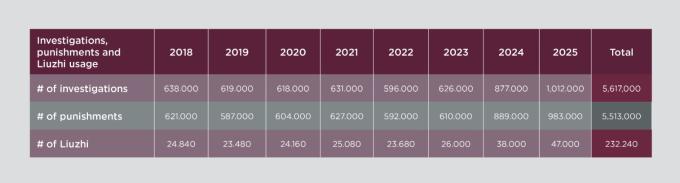
The number of investigations launched and punishments meted out now surpasses 5 million for the period 2018–2025, while the number of Liuzhi cases now far exceeds 200,000 (232,240). Each use of Liuzhi, as prior reporting from several groups—including Human Rights Watch—has shown, involves a high prevalence of torture inside the system. These detentions are, in effect, arrests and imprisonment at secret locations by an internal political Party organ, not a law‑enforcement entity. Every single use of Liuzhi constitutes arbitrary detention and, in most cases, enforced disappearance, with solitary confinement used as a tool to isolate the target.
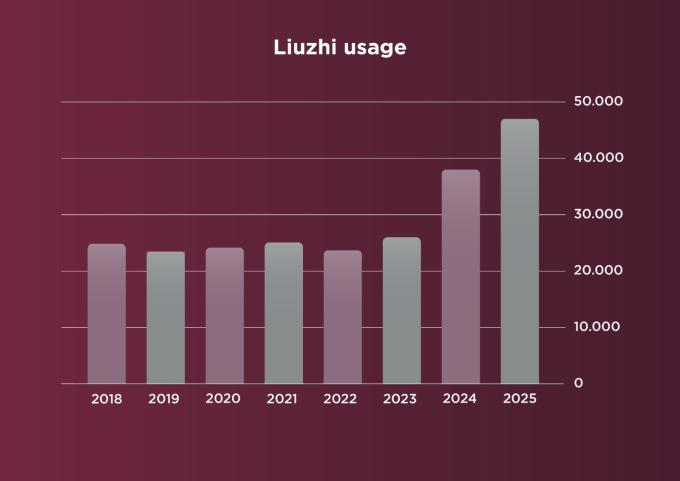
While the data on the use of Liuzhi for 2018–2022 are internal SD estimates—since no such national‑level data were previously available, aside from limited provincial figures published earlier by SD—data from 2023 onward come directly from the CCDI. These show significant growth from 26,000 cases in 2023 to 47,000 cases in 2025.
CCDI — The Chinese Communist Party (CCP) Central Commission for Discipline Inspection (CCDI) is tasked with ensuring compliance, political correctness, and loyalty among the Party’s 95 million members. Most of its work is carried out by Discipline Inspection Commissions (CDIs) at the provincial level and below.
Liuzhi — “Retention in custody” is part of an internal CCP system for detention and investigation and is not part of the State’s criminal justice system. While in Liuzhi, which is ordered solely by the CCDI without any external oversight or approval, the detainee must, by regulation, be held in solitary confinement, denied access to legal counsel (as this is not a legal process), and prevented from any form of communication. The target is, by design, held incommunicado. Locations vary—from custom‑built facilities to Party‑run hotels, guesthouses, and offices—and must not be disclosed, meaning the person is, by any definition, disappeared. Detention can last up to six months. There is no external appeal mechanism.
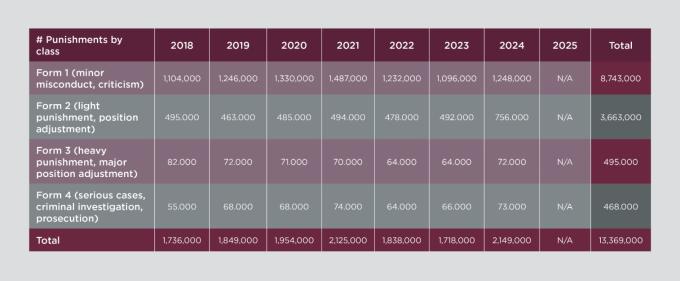
As noted above, the new work report does not include a breakdown of the “four forms” of punishment, but the table below provides this breakdown for previous years and explains what the “four forms” entail.
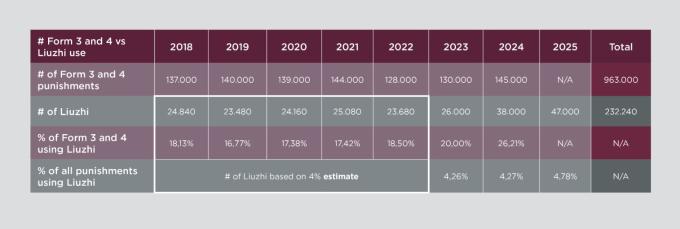
The table below, drawing on official data for 2023–2025 and SD estimates for 2018–2022, also shows an increase in how often the Liuzhi system is used during the investigatory phase, rising from 4.27% in 2024 to 4.78% in 2025.
Given the irrefutable data and the very design of the system—which constitutes enforced disappearance and arbitrary detention, as it is not part of any legal process—combined with the UN General Assembly’s position that prolonged solitary confinement (more than two weeks) used for investigatory rather than disciplinary purposes constitutes inhuman and degrading treatment (Article 16 of the Convention Against Torture, which the PRC has ratified) and torture (Article 1), we call on the UN Working Group on Arbitrary Detention, the UN Working Group on Enforced or Involuntary Disappearances, and the UN Special Rapporteur on Torture and Other Cruel, Inhuman or Degrading Treatment or Punishment to, as they did with the similar RSDL system in 2018, forcefully and directly condemn the Liuzhi system on these grounds.


