
5 years for tortured Chinese rights lawyer
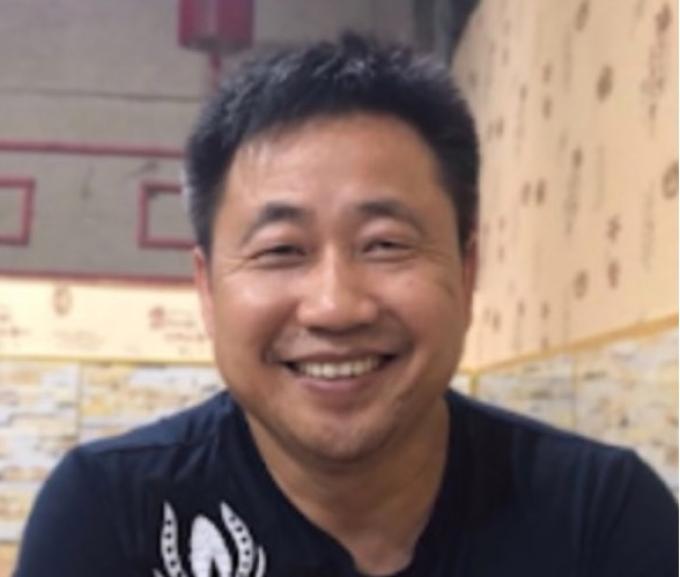
This is Xie Yang, a father of two girls. He’s now in his 50s and a prominent and well-respected Chinese human rights lawyer.
At the end of March, China sentenced Xie to five years in prison for “inciting subversion of state power,” a vaguely-defined crime often pinned to activists and rights lawyers.
Xie’s ex-wife, Chen Guiqu, who lives in exile in the US with their two daughters, posted on X that his guilty verdict was based on just a few WeChat posts. His initial arrest in January 2022 was linked to his brave protest of the arbitrary and illegal psychiatric detention of Li Tiantian, a then pregnant high school teacher for making politically-sensitive comments online.
Xie ranks among one of China’s most persecuted human rights defenders. Over the past decade, the Chinese Communist Party (CCP) has subjected him to almost every tool of abuse it employs against political targets.
Enforced disappearance
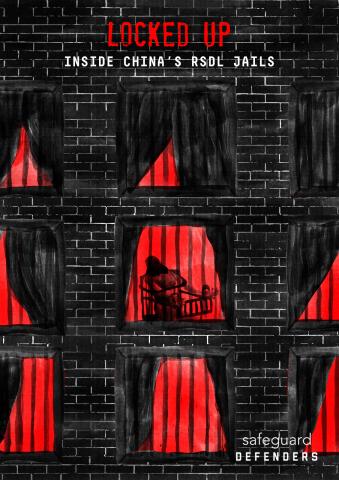
In 2015, Xie spent six months locked up in the CCP’s secret RSDL jail system. He was caught up in the 709 Crackdown against human rights lawyers. His RSDL story is told in a chapter of our book People’s Republic of the Disappeared (see below for an extract).
Torture
Police have repeatedly tortured Xie in RSDL and in detention. Police have made him hold stress positions for hours, punched, beaten and kicked him and deprived him of sleep.
Collective punishment
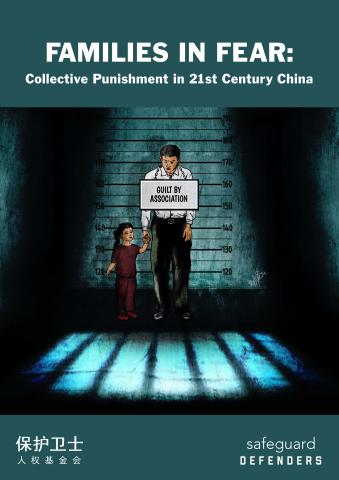
In 2015, in RSDL, police threatened to harm his then wife and two young daughters. This is a common tactic of the CCP’s practice of collective punishment. In 2017, Chen fled China with their daughters preventing police from repeating these kinds of threats.
Forced TV confessions
Xie was forced to appear in two TV confessions in 2017 in which he was made to say reports of his torture were false and he was actually treated well in detention.
Non-release release
After Xie was freed in 2017, he was allowed home but placed under heavy surveillance and sometimes home arrest, a CCP practice that has been called non-release release. Police rented an apartment next to Xie and installed a locked gate in the hallway in order to control his movements.
Hidden in detention
For months after he was detained in January 2022, Xie’s lawyers and family couldn’t locate him, likely because the detention centre intentionally did not use his full name to register him, a common CCP tactic to isolate political prisoners from outside support.
Denial of legal counsel
In RSDL, Xie was blocked from seeing a lawyer. After his detention in January 2022, Xie was also barred from seeing his lawyer for 10 months until October that year. In 2020, Xie’s own lawyer’s license was revoked as punishment for his rights work. Finally, media reported that Xie did not have a lawyer present at either of his secret trials in 2025.
Based on time served, Xie should be freed in January 2027. But it’s unlikely he will be allowed to leave China to see his former wife and daughters again. He will undoubtedly face heavy surveillance, be banned from getting a passport (part of the CCP’s growing use of exit bans) and maybe even be subjected to house arrest (non-release release).
**
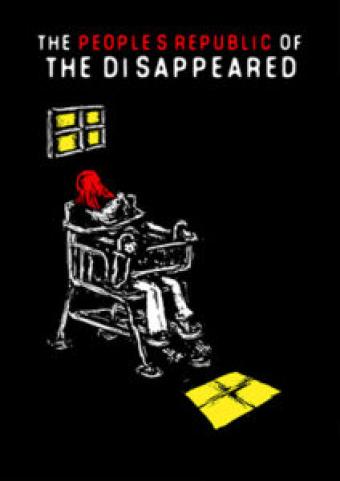
Xie’s account of his 2015 RSDL detention appeared in our 2019 book People’s Republic of the Disappeared. Ahead of the release of a third edition of this book focusing on foreign RSDL detainees, later this year, we are reproducing an excerpt from Xie’s chapter, which appeared in both the first and second editions below.
In 2011, Xie tried to visit blind lawyer Chen Guangcheng who was then being held under house arrest in his village in east China. He didn’t get far before the state-sanctioned thugs guarding Chen grabbed him, beat him up and left him for dead in the middle of nowhere. According to his friend Chen Jiangang that experience had a profound impact and inspired Xie from then on to dedicate himself to defending human rights.
Over the next few years, Xie represented a diverse range of clients, including members of the civil rights group New Citizens’ Movement and the China Democracy Party, as well as persecuted Christians and victims of illegal land grabs. His tenacity, courage and uncomplaining nature earned him the nickname, “Xie Yang the Stubborn,” among his friends, according to Chen Jiangang.
Xie Yang’s story is based on the vivid testimony of torture in RSDL he told his lawyers, and interviews conducted by Safeguard Defenders with family members and lawyers.
Xie had traveled to Hongjiang to represent a group of farmers over a land dispute. “There was nothing different about this time. He simply left for work like before,” his then wife Chen Guiqiu recalled. “There was no reason to think that things were dangerous or different than other times, or that this would happen.”
Two days later after he had left when he was asleep in his hotel room in the early hours of the morning, a group of men, some in uniform and others in plainclothes, forced their way inside. They confiscated everything, his phone, laptop, lawyer’s license, wallet; it was all taken as evidence. They took him to the local police station with his assistant, Wei Deifeng, who was released after 24 hours.
Xie spent the night shackled in the police station and prevented from sleeping. If he tried to close his eyes, an officer would slap and shake him awake. The following morning, he was shown a copy of the decision to place him under Residential Surveillance at a Designated Location and then taken away.
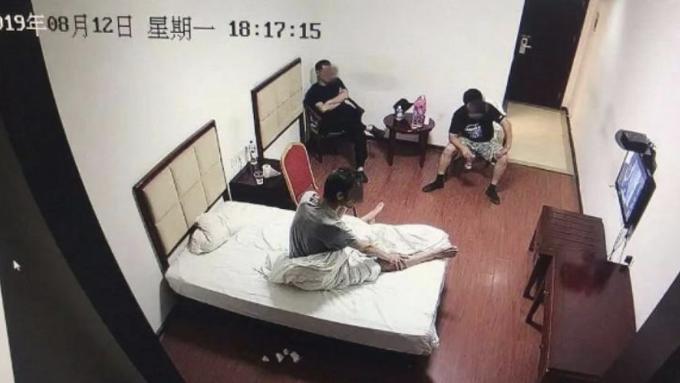
Xie was moved from the police station to a hotel, or more accurately, a government-run guesthouse, the type that are found all across the country and often used to hold people outside of the normal judicial process, in other words a Black Jail. Escorted roughly by several officers, he was forced into the room that would be his home for the next six months. There was a camera on the wall. His only roommates would be the three “chaperones,” as he called them, and the many agents tasked with his endless surveillance and grueling interrogations.
For hours, Xie was subjected to a rotating barrage of questions; groups of officers kept coming, two at a time, sometimes three or more. They asked the same questions, took no notes; it was more an onslaught to wear him down than to glean information. Xie said he later discovered that more than 40 people interrogated him.
That evening, a high-level official from the Changsha Domestic Security Unit came to see him. He hadn’t slept for over 30 hours. They knew it.
“If we think two hours of sleep a day is enough, then you get two hours of sleep. If we think one hour is enough, you get one hour. If we think half an hour is enough, you get half an hour. If we think five minutes is enough, then you get five minutes.”
“You are now under Residential Surveillance in a Designated Location. Your only right is to obey.”
For days, Xie was forced to sit on a “dangling chair,” a crude torture device composed of plastic stools piled up on each other, where he was sometimes kept for up to 20 hours a day. The stools have no backs and are stacked high to prevent the legs from reaching the ground. Hanging in this way slowly constrains the blood flow and causes escalating pain and swelling in the legs and back. The swelling begins at the feet and slowly creeps upwards until the body is engulfed in pain. Xie pleaded with them; he told them that he had a preexisting leg injury. This kind of torture, he explained in vain, would cripple him. They reacted with callous indifference, responding, “Don’t give us conditions. You’ll do what we tell you to do!”
When he failed to answer their questions the way they wanted, his interrogators would fly into a rage. They would drag his body from the stools and fling him into a corner of the room outside the range of the surveillance cameras. With one officer holding his arms, another would kick, punch and knee him. But they were always careful to avoid leaving visible marks; they spared his face and concentrated on delivering their blows to his body. At other times, Xie was hung from the ceiling and beaten. He lost consciousness at one point.
When he was confined to the dangling chair, the guards wouldn’t allow him to move or shift position to stimulate even a trickle of blood flow or to stretch out a cramped and swollen muscle. Any time Xie attempted to adjust his legs or lower his head, a guard standing behind him beat him on the back of his head, and shouted, “If you move at all, we can consider you to be attacking us and we can use whatever means we need to subdue you. We’re not gentle with people who attack police officers!”
The physical pain was combined with humiliation. Xie was forced to request permission to use the toilet or have a drink of water. He was made to go for long periods without any water. They would place a bottle or a cup in front of him but would not let him drink. This control over his basic needs, he remembered, made him miserable. Once he grabbed a bottle and started drinking only to have it forcefully snatched from his hands. He was beaten while the guard accused him of having tried to attack a police officer.
He would sit suffering on the dangling chair, while three or four interrogators surrounded him. One would stand directly in front of him, demanding answers. There was always one staring at him from the side and another lurking behind, primed to beat him and bark out orders to “Sit up straight,” or some other command.
Other times, a few of his captors would sit by his side, each with several lit cigarettes held together and puff great clouds of asphyxiating smoke into his face. When he protested, they responded, “What can you do about it? We’ll smoke like this if we want to!” This wasn’t done to elicit a confession, Xie explained. “Just to torment me and make me miserable.”
They called this the “furnace” and after his first week, if the interrogators thought he wasn’t cooperating they would threaten to send him back to the furnace. The threat of torture was always there. They made sure he knew it.
“Xie Yang, we’ll torture you to death just like an ant,” they threatened.
Xie later recalled in tears, thinking about his disappearance, “If they tortured me to death, my family wouldn’t even know.”
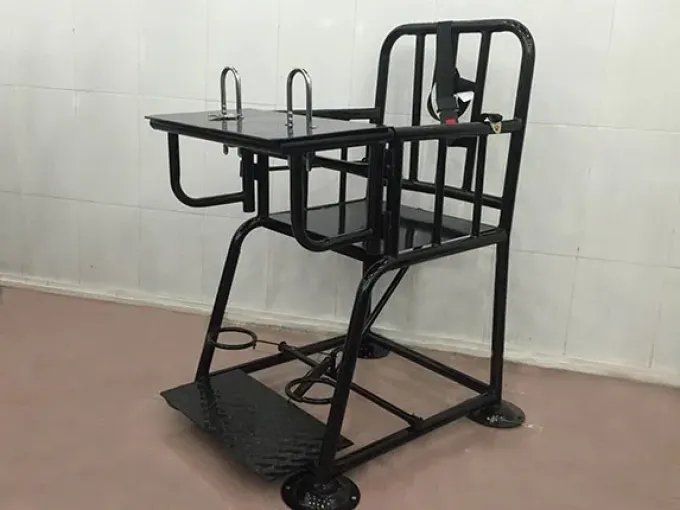
“Each day’s interrogation was full of these kinds of threats, insults, and reprimands. It was too much!” Xie recalled.
“I sleep very well during the day,” an interrogator mocked him at the start of one evening session. “Then I get so excited every night at this time because I get to torment you. You see, I’m going to torment you until you go insane. Don’t even imagine that you’ll be able to walk out of here and continue being a lawyer. You’re going to be a cripple.”
They wanted Xie to admit to all the crimes they put before him, but even more, they wanted to break him until he didn’t just agree to confess to the charges but believed he was guilty.
He was given three choices for his confession, three options to explain what they claimed were his crimes: that he did it for fame, he did it for profit, or he did it to oppose the Party and socialism.
“This is a case of counterrevolution! Do you think the Communist Party will let you go? I could torture you to death and no one could help you.”
His worst “crime,” the counterrevolution, and the focus of many nights of repeated interrogations and torture, was his involvement in the informal network of Chinese lawyers, the China Human Rights Lawyers Group. For any reasonable person, this was just a group of individual lawyers embracing the freedom of association to work together, to protect each other, and to provide mutual support for each other’s work. For the Communist Party, however, they are an organized opposition force, an imaginary threat to their continued grip on power.
His captors did not confine their torture to physical and mental abuse targeting Xie alone.
Xie’s tormentors threatened to expand their barbarous reach to his family. They made it clear they could ruin the lives of anyone close to him.
“Your wife is a professor at Hunan University—surely she must have ‘economic problems’?
“And we know your brother is a civil servant, a minor official. Surely he has some problems we could investigate?"
“Your wife and children need to pay attention to traffic safety when they’re out in the car. There are a lot of traffic accidents these days.”
“There’s no limit to how far we can take the investigation—and that includes your law firm, your friends and your colleagues. We’ll go after whomever we please and deal with them however we want.”
After several months inside his secret prison, one day in late October, Xie began to shiver uncontrollably and he broke out in a cold sweat. Gripped by fear for his life, Xie asked his captors to take him to a hospital. But the officials refused his request.
Xie was afraid again that he was going to die, and that his wife and daughters wouldn’t know. He sobbed as he recalled these details. Seeing some people outside the window, Xie shouted out his wife’s name and work unit, her telephone number and begged them to contact her. “This is Lawyer Xie Yang! I’m being held here by the Changsha Domestic Security Police! No one has notified my family! Please let my wife know that I’m ill and need medical treatment!”
That evening, a burly man in civilian clothes came in and walked right up to Xie. He abruptly shoved him against the wall with a hefty blow, knocking the wind out of him. Pinning him with one paw, he slapped him several times across the face. Xie was left in a semi-conscious state, his breath short in his compressed chest from the force of the man’s throttling.
After six months in RSDL, Xie Yang was formally arrested in January 2016 on suspicion of “inciting subversion,” and transferred out of RSDL.


