
EU Parliament investigates China’s detention of Europeans
Note: A public event on similar lines will be held in Lisbon, Portugal, mid-June. Stay tuned for updates.
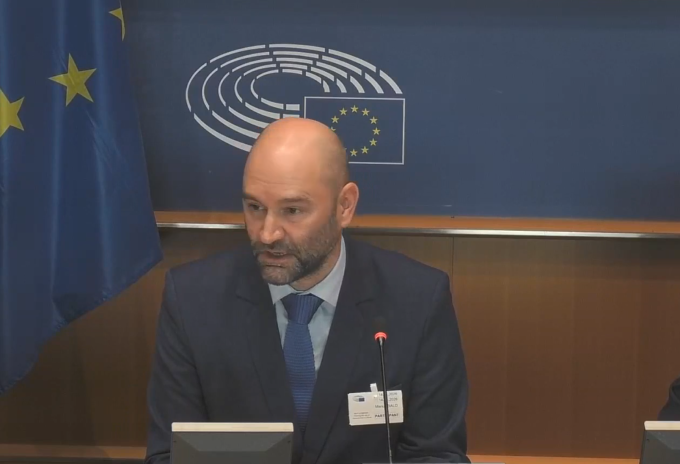
Despite repeated complaints from the Chinese government April 14 saw the hosting of a hearing-style event in the EU Parliament on China’s unjust imprisonment of European citizens and foreigners in general, with a slew of first-hand testimonies from actual victims and family representatives. The event, “Piercing the veil of imprisonment in China”, was led by Member of the European Parliament (MEP) Miriam Lexmann (EPP/Slovakia) and co-organized by MEPs Engin Ergoglu (Renew/Germany) and Marketa Gregorova (Greens/Czechia), in a large 80-seat hall filled with MEPs from across the political spectrum, alongside media, scholars, lawyers and family of victims.
A video of the event, with certain anonymous contributions removed, is available further below.
MEP Lexmann, in a comment to Safeguard Defenders, said that "in an increasingly complex geopolitical world—where China remains an important economic partner for the European Union—we must remain principled and consistent in our approach. Human rights must be at the centre of our relations with China. This means addressing credible reports of human rights abuses, including the arbitrary use of incarceration of foreign nationals, and ensuring that our policies do not contribute to or enable them."
The testimonies were led by the UK’s Peter Humphrey, a former detainee and prisoner in China, who took the role as lead panelist setting the scene for the discussion, alongside remarks on his own two-year-long incarceration in a pre-trial detention centre and later a prison in Shanghai. Having spearheaded the creation of the event himself, he explained: “Why am I so involved in all this imprisonment stuff? I spent 20 years in mainstream journalism and then 15 years in investigations. I have spent over 50 years in all involved with China in various roles - and two of those years were in Xi Jinping’s prisons. My American wife was imprisoned at the same time. Both of us were falsely accused of illegal information gathering for my due diligence company, ChinaWhys.”
He was joined by Safeguard Defenders’ Peter Dahlin, a Swedish citizen, who spoke about the still little understood RSDL system for long-term secret jailing at unknown locations, with remarks about his own experience in a “black jail” in the RSDL system. Romania’s Marius Balo, a teacher and theologian who spent eight years in detention and imprisonment, the UK’s Sebastien Lai, son of Hong Kong’s imprisoned media mogul and pro-democracy advocate Jimmy Lai, and exiled German-based Ding Lebin, whose parents have been jailed on multiple occasions and tortured for practicing the Falun Gong religion, - and on whose behalf the European Parliament has previously issued a resolution - made up the rest of the panel.
Two surprise witnesses also took center stage: France’s Francois Dupouy, whose Chinese husband has spent over five years in prison, with another six years to serve on what Peter Humphrey described as clearly homophobic and political persecution; another French victim, anonymously referred to as Remy, who was subjected to severe torture and beatings during two years of detention. Peter Humphrey provided information and made remarks relating to some 25 European citizens who have faced detention and imprisonment in China, often on arbitrary grounds (see list at bottom). Marius Balo cited a young female Romanian victim largely ignored by the Romanian government when he said, "the event allowed stories of injustice to be shared, including that of a 28-year-old Romanian woman imprisoned there for more than eight years. The Romanian government, still communist in thinking, did nothing to help her."
Throughout the presentations and ensuing discussion, which despite the best of attempts ran over time, and could have gone on for hours more, some key issues addressed were:
Forced labor in prisons
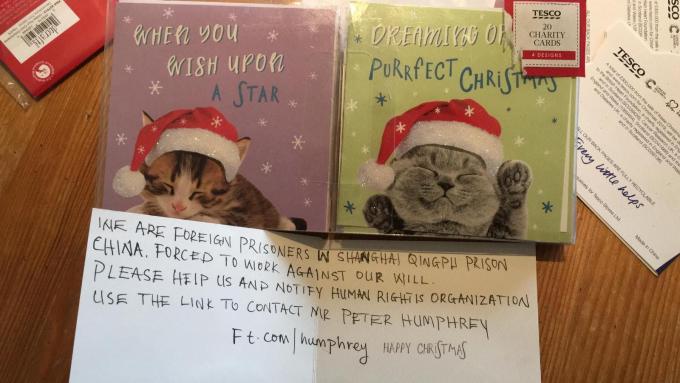
To some visible shock, Peter Humphrey produced copies of numerous products made in the Chinese prison where he and others were held, products which were readily available in supermarkets and malls across Europe; and Marius Balo described his prison facility as really being a large factory, where cell blocks took up only a small part of the facility. Peter Dahlin, referencing a forthcoming report from Safeguard Defenders, said 32% of surveyed prisoners were forced to work without any pay at all – while others have pointed out that while they officially received a certain pay, the actual payment received shrank because much of it was skimmed in acts of corruption by the prison authorities.
Confession is king
Peter Humphrey stated that as many as 10,000 foreigners were held in China based on research concluded in January 2024, mostly coming from large and poor developing countries. He stressed that while not all the cases of foreigners imprisoned in China today are obviously political, the reality of the system makes every case political due to a Chinese judicial setup designed to convict every defendant without fail and to allow no presumption of innocence unless proven guilty. Defendants and lawyers are prevented from mounting a real defense with any defense witnesses, the conditions in pre-trial detention facilities are designed to crush a defendant into falsely confessing a crime, and not a single person gets a fair and transparent trial.
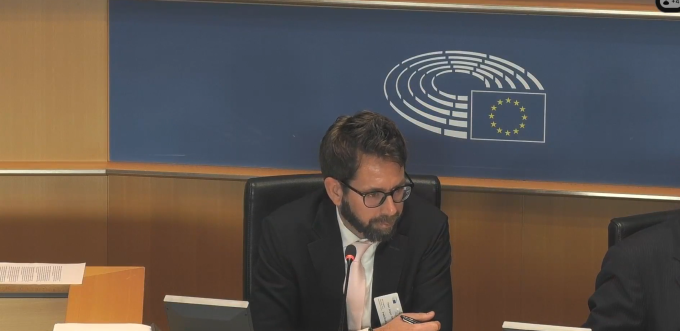
Peter Dahlin added that while prosecutors can freely use witnesses and extract witness statements from witnesses, who are not allowed to be cross-examined by defense lawyers, the defense team is not allowed to bring witnesses to court; prosecutors are allowed simply to read statements from their witnesses, without challenge.
Peter Dahlin went on to elaborate on the role of confessions in the Chinese trial system. The system is understaffed, underfunded, and its personnel often have only had a low level of education. Yet the court system maintains a conviction rate of 99.98%. Or to put it more directly - while there are over a million criminal verdicts each year, last year saw only 294 not guilty verdicts. A random selection of judgments from criminal courts reveals the reliance on confessions rather than any forensically-based investigation; it is very rare to find a defendant who denied the charges, or where a confession is not the basis for the verdict, and it is incredibly rare to find other forms of evidence forming the basis for their convictions.
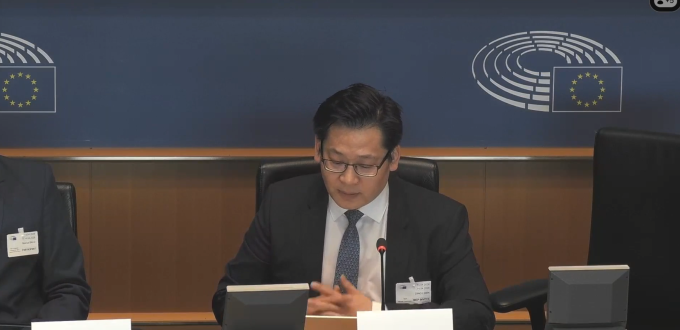
For some, it is even worse. Ding Lebin spoke about both his own parents imprisonment, but also the wider situation for Falun Gong practitioners: "As of April 2026, more than 5,339 deaths of Falun Gong practitioners due to persecution have been documented and confirmed by credible NGOs. In 2025 alone, 124 deaths were recorded, with victims aged between 35 and 94. Over the past 27 years, more than 100 different torture methods have reportedly been used against Falun Gong practitioners." He also pointed out that methods developed against Falun Gong adherents "are now also applied to Uyghurs, Tibetans, Christians, human rights lawyers, and other political prisoners."
From detention to prison
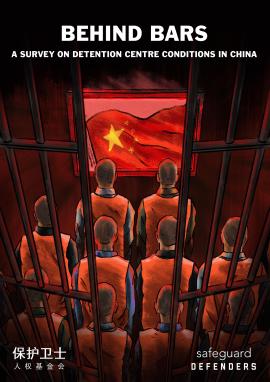
The EUP hearing coincided with an informal soft launch of a new Safeguard Defenders report Behind Bars: a survey on detention centre conditions in China, which analyses conditions inside pre-trial detention facilities (full release of the report being set for June 16). To learn more, a sister report, also drawing on a survey, this time on prison conditions, will be issued later in the summer. In comparing the two, the highly exposed situation and vulnerability of defendants become clear. While prisons are rife with violations, those very same violations are commoner inside pre-trial detention facilities at the heart of the criminal justice system where the police and prosecutors must secure the needed confessions, at almost any cost. The report shows that 73% of those surveyed had been denied access to a lawyer of their choice before trial, and 76% had suffered violence.
In his brief presentation before the discussions, Peter Dahlin also outlined the RSDL system, residential surveillance at a designated location, which takes the powerlessness of a pre-trial detainee to new extremes, where people are kept at secret locations, for up to half a year, incommunicado from the outside world, and without legal counsel. This system, designed to be a rare exception, now grabs tens of thousands of victims per year. It has been systematically used in politically sensitive cases, as well as against at least 21 foreign citizens that we know of so far. Abuse inside the RSDL system is rampant and is more or less guaranteed, according to long-term studies. There are also other systems of detention in China, but the key point made was that Chinese police have the freedom and ability to lock up people in almost any manner, and under any pretence; and in the case of RSDL, or shorter-term detention, no court order or prosecutor approval is required. Their power is overwhelming. The RSDL system is also structured in such a way that foreign governments and consular officials can remain oblivious about where or how their citizens are being incarcerated. It is like “a Guantanamo Bay on steroids”.
Lack of European solidarity clause and coordination
Peter Humphrey spotlighted the USA’s Levinson act, and its establishment of a Special Envoy for Hostage Affairs (SPEA). “Today the European Union has no legislation comparable to the American Levinson Act which sets out criteria to designate an American prisoner held overseas as arbitrarily detained or as a hostage. That law created a requirement to refer such cases to a Special Envoy for Hostage Affairs, who operates within the State Department and has a direct line to the President. There are currently two new pieces of American legislation going through Congress designed to further emphasise, to define in detail, and to combat China’s practice of political hostage-taking [and] the intention is to strengthen and broaden the scope of the Levinson Act.” Peter Humphrey believes that every foreign prisoner in China is “arbitrarily detained” due to the lack of a fair and transparent trial, one of the key criteria set out in the Levinson Act that determines that a prisoner is arbitrarily detained and therefore is a hostage.
He went on to point out that there is a Chinese legal mechanism to get a prisoner out of China that most governments are not using. “Even China has a law that can help European governments get their citizens out of Chinese prisons. A Chinese law promulgated in 2018 allows any country - even a country that has no bilateral prisoner transfer agreement with Beijing - to initiate a discussion with Chinese judicial authorities to transfer a citizen from a Chinese jail to one in their home country,” he said. “But most governments have not bothered to look at this, or even notice it, except perhaps France,“ he added.
Peter Dahlin outlined the failures of European governments to act on cases in a coordinated manner. He showcased how, when a citizen of an EU member state is detained by China and there is a clear political motive or revenge motive aimed at gaining diplomatic leverage, the country is largely left standing alone, and that China has clearly anticipated and exploited this as part of its divide-and-rule strategy to pick off EU countries one by one, knowing there is unlikely to be a coordinated response. When Sweden was targeted, one would have expected France or Romania to come to their aid, but they did not. Unsurprisingly, when France was targeted, neither of those two came to the aid of Paris either, and no country came to Romania’s aid when it became China’s victim. Such vulnerability can be overcome by establishing a European solidarity clause. The first step towards that should be information sharing between member states, and a central EU-organized point focused on this issue. For example, right now there is no real comprehensive data on the number of EU member state nationals held in Chinese detention centres and prisons. Yet there is no reason why there would not be, as such basic meta data comes with no privacy invasions whatsoever. Despite that, many member states have rejected freedom of information requests by Safeguard Defenders for just such data.
While the EU Parliament does not hold a mandate over this, they do certainly hold the ability to call for the EU to take steps forward in this regard, and to push for developing working language for a solidarity clause and its potential working mechanism, not just related to China but on behalf of EU nationals detained and imprisoned worldwide.
Ding Lebin also warned that "the CCP is using the persecution of Falun Gong as an ongoing testing ground for methods of repression against other religious communities and human rights defenders.“ With the recent expansion of the crackdown on Christian "house churches", his words rang eerily true. It would benefit the EU and its member states to pay closer attention not only as it is the moral right thing to do, but to identify changes that may later be applied to a wide variety of other groups.
The need for more understanding of the situation faced by EU nations in China and beyond
Marius Balo of Romania said, "As a former prisoner of China, this hearing, the first ever organized by the European Parliament, meant a great deal to me. Not just for me personally, but for every foreigner still suffering inside China's forced-labor gulags. The world needs to hear these stories. We need to remember what human beings are capable of doing to each other under totalitarian rule."
Ding Lebin called on "The European Union, the G7, and EU member states [to] initiate an independent international investigation into this persecution, make freedom of religion and belief in China a core component of national security objectives when engaging with Communist China, expand sanctions against CCP perpetrators, and combat transnational repression.”
Peter Dahlin concluded his remarks by noting that, in the past, the primary objective of foreign governments was to secure the release of their detained citizens, which led to a fairly rigid and predictable playbook. Today, however, this is rarely the main goal, as obtaining a release has become far more difficult unless it forms part of an unofficial prisoner swap. Instead, a key objective now is to improve the treatment of those detained — something that can literally be a matter of life and death — and this requires different tactics.
MEP Lexmann commented that on the event and its topic by saying that "We have a moral responsibility to make sure that we are not complicit in human suffering, including by importing products made through forced labour or modern slavery. In contrary, we have to do everything we can, to help these victims and bring them back home. I believe that such events greatly contribute to the understanding of China’s inhumane actions and have an ability to shape our policies in regards to the protection of human rights in China."
Safeguard Defenders plan to hold a similar, but public, event along the same lines in Lisbon, Portugal soon, and based on that, plan further events in other European capitals, with select European victims invited.


As compiled and presented by Peter Humphrey.
Peter Humphrey, a Briton, and at that time an EU citizen, was wrongfully imprisoned in Shanghai along with his American-Chinese wife in 2013-2015 on false charges of illegally acquiring personal information for the use of his due diligence company, ChinaWhys. The case attracted intense media coverage. They were held for over a year in the Shanghai Detention centre and for a second year in prisons, on sentences of 2.5 years and two years respectively. In captivity he developed cancer due to the deliberate withholding of medical treatment, and their 18-year-old son was cast adrift. Peter wrote a long article about the ordeal in the FT Weekend Magazine issued 16 Feb 2018.
Peter Dahlin, a Swedish activist, who operated a human rights org from 2008 to 2015 in Beijing was detained by Chinese State Security in January 2016. He was held in solitary for 23 days in a secret "black jail", which was a new system at that time for secret detentions, and accused of "endangering state security" through his work for the "China Action", a local Beijing-based NGO. He was interrogated and forced to make a televised confession. He was deported in dire physical and mental health after suffering abuse tantamount to torture and being paraded on Chinese TV. He now runs a successful NGO from Europe, Safeguard Defenders, focused on human rights in China.
Robert Rother, a German businessman, spent almost eight years in a Beijing prison after being murkily convicted of an alleged financial fraud. Upon his release he told media that he witnessed wide-ranging forced labour and torture while behind bars and in 2020 published a book about his experience, Dragon Years: How I Survived 7 Years and 7 Months in a Chinese Prison.
Gui Minhai, a Swedish citizen born in China, was a writer and publisher in Hong Kong of saucy books about Chinese politics and politicians. He was abducted by Chinese secret police from his home in Thailand in 2015 and spirited into China where he has been held for almost 11 years. He is nearing the end of a 10-year sentence, but it is feared that China will find an excuse to continue holding him.
Michael Kovrig, a Canadian-Hungarian dual national, is a former Canadian diplomat and later a private sector geopolitical analyst, who was seized by the secret police in China in December 2018. His arrest and false spy charge was in retaliation for Canada’s arrest of Huawei business executive Meng Wanzhou on a US extradition request, making him a political hostage. He was released in September 2021 as part of a negotiated swap for Ms Meng, also involving the release of Canadian prisoner Michael Spavor.
Ian Stones was a veteran of the British business community in China for 40+ years before he vanished in December 2018 having been secretly arrested and charged with a state secrets offence, which he contested. He had been a pioneer in China’s industrialisation, with leading roles in several prominent Sino-western joint ventures and later becoming a highly sought-after consultant. He was held incognito until the Wall Street Journal broke the story in January 2024. He was released from a Beijing Prison on 31 March 2024, but it is believed he is still in China and unable to leave. He has never spoken publicly about his ordeal
Jimmy Lai, a Hong Kong businessman and British citizen, born on the Chinese mainland, was a well-known industrialist, fashion retailer, media tycoon and democracy campaigner until his arrest in 2020 in China’s crackdown on Hong Kong’s pro-democracy movement. In February 2026 he was sentenced to 20 years in prison on sedition charges, at the age of 78. Hong Kong’s best known political prisoner, he is supported by a vocal human rights campaign led by his children Sebastian and Claire Lai.
Marius Balo, a Romanian theologian destined for the priesthood, was arrested in China in 2014 while teaching English in Beijing. He was falsely accused of involvement in a fraud perpetrated by a Chinese finance company that he worked for part-time as an usher. He served eight years wrongfully imprisoned in Shanghai, having denied and rejected the charges. He has told his story in Romanian in a book titled the Pink Blanket.
Remy (alias), is a French citizen who spent almost two decades in China where he owned a textile factory and a restaurant in Guangdong. He began to be harassed in a protection racket by local mafia and was arrested in 2019 falsely accused of smuggling drugs in his clothing exports, in a set-up involving a rogue Mexican. He was given a life sentence but a Beijing court overturned the sentence in a rare appeal victory. He was released in 2021 having been rendered penniless. He was held for two and a half years in a Guangdong detention centre where he has described being tortured in a report published by Libération in September 2025. He spoke anonymously to an EUP hearing on 14 April 2026
Francois Dupouy and Wu Xianle. Francois Dupouy is a French citizen whose Chinese husband Wu Xianle has been imprisoned for the past five years under an 11-year sentence for an alleged but undisclosed “state secrets” offence. Dupouy and Wu are legally married under French law and lived in Beijing. Wu was arrested while Dupouy was away in France during the Covid epidemic, unable to get a visa to return to Beijing. This case is homophobic and political in nature. China’s Xi Jinping is a homophobe opposed to LGBT rights. And Wu worked as an adviser for Xi’s predecessor Hu Jintao, who Xi has purged.
Fabien Thuillez is a French citizen who arrived in China in 2007 and set up a company in the recruitment sector providing support for visa and work permit applications. He had around 20 staff. In 2014 he was detained but released on bail while police investigated him. In 2015, at Christmas, he was arrested on a charge of immigration fraud. He was sentenced to 18 months in prison. Having not confessed to a crime, he was harassed, food was withheld from him, external communication was blocked, he was sent to solitary, he lost 35 kg in weight. He was released in 2017.
Matthew Radalj is a Croatian-Australian who was arrested and jailed in Beijing in 2020 on a false charge of armed robbery when he defended himself against an attack by security guards at a Beijing electronics mall as he argued with a vendor who was refusing to return his smart phone after failing to repair it. He spent 18 months in a Beijing detention centre and was then incarcerated at Beijing Number 2 Prison. He was threatened with a lengthy sentence and was coerced to sign a false confession in return for a more lenient prison term of four years. He alleges he was subjected to torture, beatings and solitary confinement. He spent time in his prison with Briton Ian Stones and American pastor David Lin.
Tom Menier is a French-British dual national who went to China in 2004 to work for a famous French alcohol brand. Later he became an agent for businesses wanting to set up in China. He got caught up in a crackdown in 2017 against double-invoicing, a widespread practice in China to mitigate import duty which was also used by Tom’s clients. He was arrested and sentenced to six years. The UK did nothing to help get him out. But French former prime minister Jean-Pierre Raffarin intervened, and Tom was freed under a prisoner transfer in 2021, spending nine days in a French prison as a formality to satisfy China before reaching freedom.
Moses (alias) is a British national who worked as a wealth management advisor and was arrested in Shanghai in 2011 and falsely accused of fraud, receiving a nine-year jail sentence. After his arrest, one of his Chinese clients stole his financial advisory business. Grudgingly accepting his unjust fate, he earned some sentence reduction in Qingpu Prison through good behaviour, thinking this was the best way out. He was eventually released in 2019.
Laurent Fortin is a French national and pastry chef from Normandy, who went to Shanghai in 2016 to work as a pâtissier for the Farine Bakery chain. He was arrested in 2017 with several other French and Chinese staff after a health inspection claimed to find stocks of expired flour. Initially detained for nine months, he was released on bail in early 2018 just before a visit by President Macron. He later received a suspended jail sentence of two years and five months and a fine and was allowed to return home in December 2019. All of this was even though a case of expired flour should have just been a minor regulatory violation and not a criminal offence. His story has been told in local French newspapers.
Paulo (alias), an EU citizen (country name withheld for purpose of anonymity) from southern Europe, was arrested in 2021 and is serving a life sentence on a false charge of importing and providing a banned substance which was not actually a prohibited substance in other countries and not listed on the prohibited substances list of the International Narcotics Control Board. He had been serving a tea made with this herb at wellbeing retreats.
David (alias) is a German national who was working for a German auto parts supplier in Shanghai when he was wrongfully arrested on a fake charge of attempted robbery and sentenced to six years in prison. He had challenged a money changer who exchanged 10,000 Euros for David’s locally earned Chinese Yuan ahead of a trip home to Germany. When he tried to use the money, David learned the Euros were counterfeits. Upon return to China, he tracked down the money changer and there was an altercation. Chinese authorities ignored German efforts to get him a prisoner transfer to Germany, and he served five years three months before leaving China.
Alina Apostol is a 28-year-old Romanian translator who has been imprisoned since 2018 in China's coastal Fujian province on bogus contract fraud charges. Subjected to daily forced labour, she has lost teeth and is in a dire physical and mental state, according to inquiries by ex-prisoner and campaigner Marius Balo who is lobbying the Bucharest government to press China for her transfer to Romania.
An EU citizen (who wishes to remain anonymous) from northwestern Europe established a business in eastern China importing food products. After years without trouble, he was arrested and jailed on a contrived smuggling charge for which Chinese counter-parties in his business were the real culprits. He was jailed for 11 years but received an early release after his government intervened.
Robin is a French national from Bordeaux and a traditional Chinese medicine practitioner masseur who trained in China as well as being a holiday park entertainer. He worked off and on in China from 2013. He was arrested in eastern China when he was smoking marijuana but was charged with drug trafficking because he shared his drugs with other expatriates. He was sentenced to three years after his Chinese girlfriend got his sentence reduced from seven years. He was released in 2021.
A China-born EU scientist (who wishes to remain anonymous) from a north European country who worked for an American biotech company performing R&D in Shanghai with Chinese partners was arrested and charged with espionage. He was arrested because he had sent his company’s own research work product back to his US headquarters. His employer lifted no finger to get him out. He was sentenced to six years in prison and was released in extremely poor health in early 2026.
Dima (alias) is a Belarusian national (who wishes to be anonymous) who was arrested in China after being found in possession of fake credit cards. Dima was jailed for three years and four months. This included several stints totalling eight months in solitary confinement because he repeatedly filed complaints and staged protests about ill treatment and prison abuses. He was released in 2021.
Chan Tao Poumy is a French citizen born in Laos who was sentenced to death in China in 2010 on a charge of drug trafficking. French authorities engaged diplomatically with China for 20 years to save him, pleading against the death penalty. But China executed Mr Chan on 3 April 2026, triggering a strong French condemnation.
Richard O'Halloran is an Irish businessman who was prevented from leaving China under a so-called exit ban for almost three years. He was finaly allowed to fly home in January 2022 after his three-year ordeal. O'Halloran, a director at CALS Ireland (China International Aviation Leasing Service), travelled to Shanghai in February 2019. Irish broadcaster RTÉ reported that the firm was in dispute with China's authorities. When he had tried to leave China, he was told an exit ban was placed on his passport. Hundreds of foreigners in China are believed to be subject to exit bans.
Unknown Czech case. In January 2026 the Chinese ambassador in Prague said Beijing had arrested a Czech student in China. This came soon after Czech police arrested a Chinese citizen in Prague who worked for China’s Guangming Daily newspaper, on espionage and interference charges. The man, Yang Yiming, was collecting intelligence on Czech politicians, primarily about details of their engagements and visits to Taiwan. Under Czech, law he could get up to five years in prison. The name and alleged offence of the Czech student have not been made public. This is a clear case of blackmail and tit-for-tat hostage-taking by China reminiscent of other cases impacting western democracies.


